
Excited to Share Some Great News!
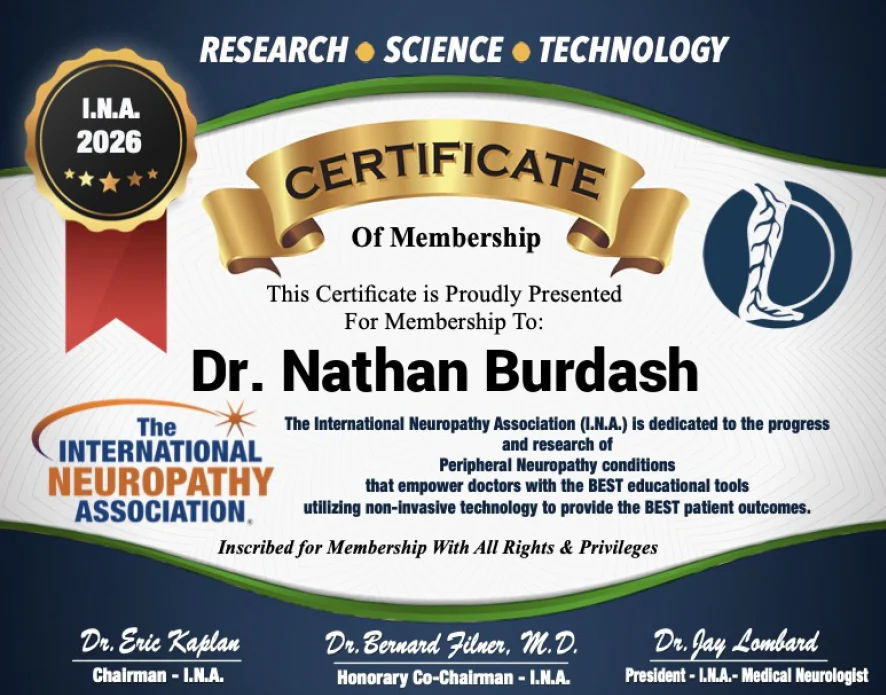
I'm excited to announce that I have recently earned my membership certification with the International Neuropathy Association (I.N.A.), expanding my education in the evaluation and conservative management of peripheral nerve conditions.
As many of you know, my goal has always been to provide the latest evidence-based care to help patients avoid unnecessary medications and surgery whenever possible. This certification allows me to continue expanding the services we offer to patients experiencing nerve-related pain.
What Is Neuropathy?
Neuropathy simply means damage or irritation to a nerve. Many people think neuropathy only affects diabetics, but that's only one cause. Nerves can become irritated from:
- Diabetes
- Disc herniations
- Sciatica
- Spinal stenosis
- Carpal tunnel syndrome
- Neck injuries
- Whiplash
- Repetitive work injuries
- Poor circulation
- Vitamin deficiencies
- Certain medications
- Previous trauma
Common Symptoms
Many people live with nerve irritation for years without realizing it. Symptoms may include:
- ✅ Tingling
- ✅ Burning
- ✅ Numbness
- ✅ Pins and needles
- ✅ Sharp shooting pain
- ✅ Electric shock sensations
- ✅ Cold or hot feelings
- ✅ Muscle weakness
- ✅ Balance problems
Symptoms can occur in the:
- Feet
- Toes
- Legs
- Hands
- Fingers
- Arms
Neuropathy Isn't the Only Cause
One of the biggest misconceptions is that tingling automatically means neuropathy. In reality, many nerve conditions produce very similar symptoms. Examples include:
- Sciatica from a lumbar disc herniation
- Pinched nerves in the neck
- Carpal tunnel syndrome
- Cubital tunnel syndrome
- Thoracic outlet syndrome
- Peripheral neuropathy
- Nerve entrapments around the shoulder, elbow, wrist, hip, knee, or ankle
This is why obtaining the correct diagnosis is so important. Treating the wrong condition rarely leads to lasting improvement.
Our Approach
Our office focuses on identifying where the nerve is actually being irritated. Depending on the cause, treatment may include:
- Comprehensive neurological examination
- Muscle and range-of-motion testing
- Functional nerve assessment
- Spinal evaluation
- MRI review or advanced imaging when appropriate
- Chiropractic care
- Class IV laser therapy
- Shockwave therapy (when appropriate)
- Spinal decompression
- Rehabilitation exercises
- Balance and gait training
- Home care recommendations
The goal is to reduce pressure on the nerve, improve function, and help patients return to the activities they enjoy.
When Should You Be Evaluated?
Consider scheduling an evaluation if you experience:
- Tingling in your hands or feet
- Burning pain
- Persistent numbness
- Sciatica
- Neck pain with arm symptoms
- Low back pain with leg symptoms
- Weakness
- Frequent dropping of objects
- Difficulty walking or poor balance
Early diagnosis often leads to better outcomes.
Thank You
Thank you for trusting me with your healthcare. I'm excited to continue bringing new education and advanced treatment options to our community.
If you or someone you know is experiencing numbness, tingling, burning, or nerve pain, we'd be happy to help determine the cause.
Dr. Nathan Burdash, D.C., FPSC(C)
Primary Spine Care Fellowship Candidate
Trauma Qualified
Member, International Neuropathy Association

Dr. Burdash
Nate Burdash uses chiropractic care to improve the health and wellness in all areas of patient’s lives, whether they are having problems with back pain or neck pain, or just want to start feeling better when they wake up in the morning.
Latest Posts

Excited to Share Some Great News!
July 21, 2026

